
Epic Team Building Experiences for High Achievers
Planning for high-achieving teams requires more than just a calendar – it requires a corporate event planning timeline built on infrastructure and brand stewardship. Whether you are managing a 5,000-person flagship conference or a high-end 1,000-person gala, success is dictated by your ‘Anchor Points.’ At the enterprise level, these non-negotiable deadlines must be secured 12 to 24 months in advance to guarantee access to the world’s most exclusive venues and resources.
Remember that high achievers tend to overexert, so it might be beneficial to encourage them to slow down and host a corporate retreat.
Either way, keeping your team’s tenacity in mind, this article will present some of our best team building experiences tailored for high achievers.
PRO TIP: A well rested and cared for employee promotes company productivity and a company brand employees are proud to work for


Problem-Solving & Collaboration
While standard icebreakers have their place, high achievers respond best to themes that feel cohesive and curated. We saw this firsthand when we reimagined classic tabletop challenges for a luxury setting…
The Art of Thematic Customization
We transformed a holiday gathering into an immersive Parisian street scene. To elevate the experience, we reimagined “Minute to Win It” games with a culinary twist: a high-stakes Croissant Eiffel Tower build and a “Mad Macaron” challenge featuring hidden spicy surprises.
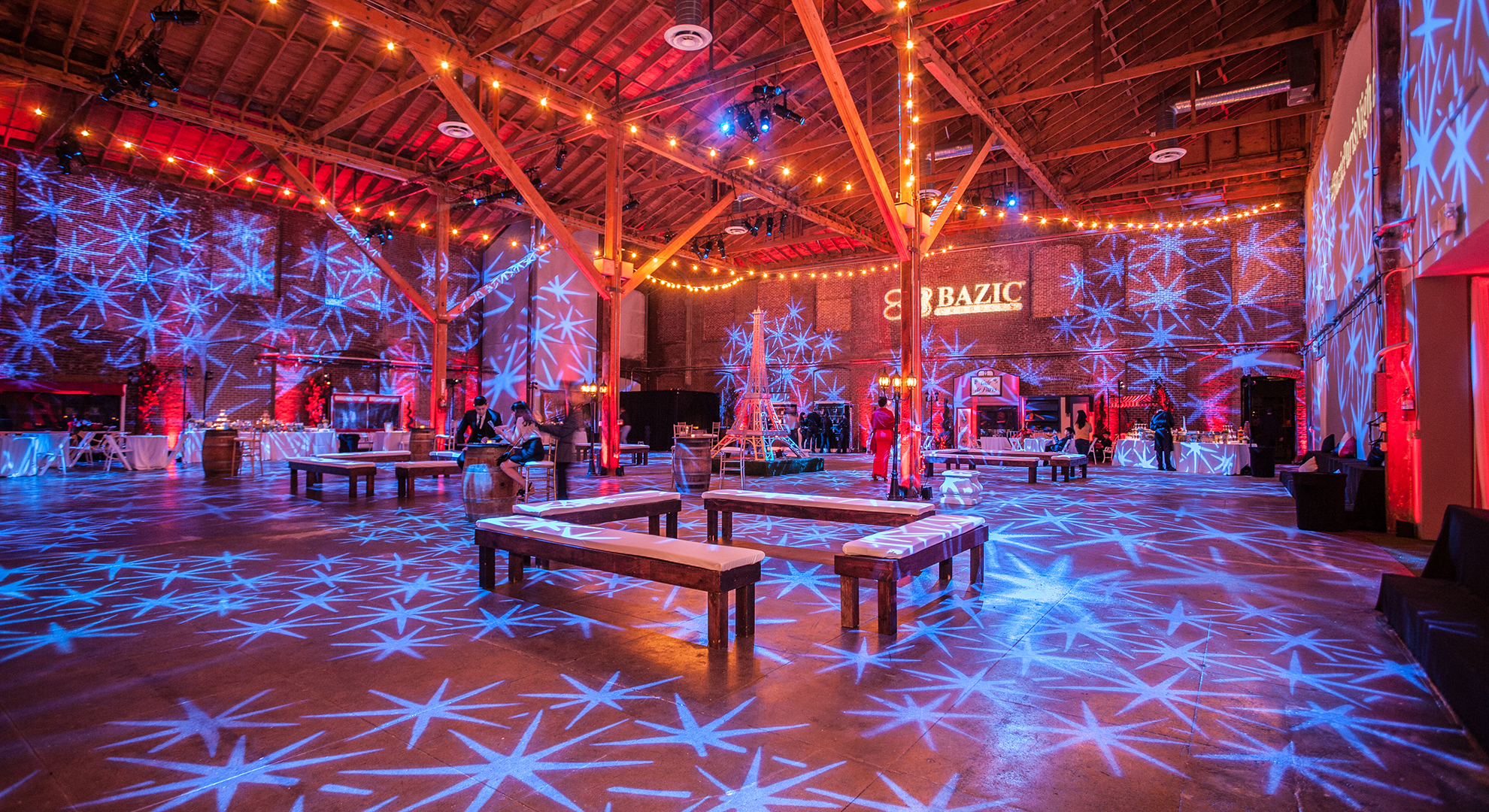 View BAZIC Case Study
Try a Hackathon 

Lead Time
2 – 4 Months
Cost
$$$
Groups
20-100+
Focus
Collaboration
Event Guide: The Innovation Hackathon
Objective: Encourage innovation by organizing a hackathon where teams tackle a real-world or internal company challenge. Participants engage in rapid prototyping and creative problem-solving, fostering a culture of innovation within the group.
📋 Step-by-Step Instructions
1. Celebrate and Implement Award fun prizes (e.g., “Most Innovative,” “Most Practical,” or “People’s Choice”).
2. Define the Challenge Select a meaningful prompt. It could be an actual bottleneck your company is facing, a new product feature idea, or a way to improve company culture. Ensure it is broad enough to allow for diverse solutions but specific enough to keep teams focused.
3. Form Cross-Functional Teams Mix up departments to break down silos. Pair a marketer with a developer, or an HR specialist with a salesperson. Diverse perspectives drive the best creative problem-solving.
4. Set the Ground Rules & Timeline Establish a strict but energizing time limit (e.g., 4 to 24 hours). Provide the necessary tools, such as digital whiteboards (Miro/Mural), presentation templates, and collaboration channels.
5. Facilitate Rapid Prototyping Encourage teams to focus on the concept and viability rather than perfection. They should build a basic mockup, a workflow diagram, or a pitch deck that clearly demonstrates their solution.
6. The Pitch & Judging Session Have each team present their idea in a lightning round (e.g., a 3-minute pitch followed by 2 minutes of Q&A). Bring in company leaders or objective peers to judge the ideas based on creativity, feasibility, and impact.
Encourage innovation by organizing a hackathon where teams tackle a real-world or internal company challenge. Participants engage in rapid prototyping and creative problem-solving, fostering a culture of innovation within the group.
Try a Race to Space Thinking Workshop
Lead Time
2 – 3 Months
Cost
$$
Groups
15-50
Focus
Communication
Event Guide: The Design Thinking Rocket Challenge
Objective: Dive into a structured workshop that guides participants through the design thinking process of creating the best rocket. Teams compete to see whose rocket flies the highest while fostering a culture of creativity and user-centered solutions.
📋 Step-by-Step Instructions
- Phase 1: Empathize & Define (The “User” Persona): Introduce the project’s constraints. If you are building water/soda bottle rockets or paper stomp rockets, define the “user” as the environment itself (aerodynamics, wind resistance, and gravity). Have teams discuss: What forces are we fighting? What causes a rocket to fail or veer off course?
- Phase 2: Ideate (Divergent Thinking): Provide teams with a diverse array of building materials: plastic bottles, cardboard, foam sheets, various tapes, clay (for nose cone weight), and plastic bags (for parachutes). Give them 10 minutes to sketch out at least 3 wildly different rocket profiles—varying the shape of the fins, length of the body, and weight of the nose cone.
- Phase 3: Prototype (Rapid Construction): Teams select their best design and construct a working prototype. Remind them not to over-engineer at this stage; the goal is a Minimum Viable Product (MVP) that can withstand a basic launch pressure without falling apart.
- Phase 4: Test & Iterate (Fail Fast): Before the final showdown, allow every team a single “test launch.” Watch the flight path closely. Did it tumble? (Needs more nose weight or better fin alignment). Did it drag? (Too heavy or poor aerodynamics). Teams immediately head back to the drawing board for a fast 15-minute iteration window to fix their designs based on real data.
- The Final Launch Competition: Gather everyone at the launch pad for the official competition. Track the peak height or flight time of each rocket.
- Deconstruct & Debrief: Bring everyone back inside. Have the winning team share what they learned during the testing phase that changed their final design. Connect this back to your daily business: How did testing early and failing fast save the final product?
⚠️ Safety First: Ensure you choose a clear, open outdoor space for the final launch phase. If you are using pressurized water rocket kits, assign a single designated “Launch Commander” to handle the pump and system release to keep hands clear of the launch tube.
Dive into a structured workshop that guides participants through the design thinking process of creating the best rocket. Teams compete to see whose rocket flies the highest while fostering a culture of creativity and user-centered solutions.
PRO TIP: Use a drone to get high-viewing clips of the rockets to help definitively identify the winner.
Try an Email Scavenger Hunt
Lead Time
1 – 2 Weeks
Cost
$
Groups
10 – 500+
Focus
Communication
Event Guide: The Pre-Event Email Scavenger Hunt
Objective: Get your team amped up for your upcoming event by hiding easter eggs and clues within regular internal communications. This builds a sense of anticipation, drives higher email open rates, and promotes creative thinking and problem-solving skills.
📋 Step-by-Step Instructions
- Map Out the Finale (The Prize) Determine what participants are competing for. Is it a hidden clue that unlocks the password to a locked digital box? A secret code phrase they must whisper to the event coordinator upon arrival? Or a digital puzzle where each email provides one piece? Define the winning condition first.
- Design the Clue Archetypes Mix up the difficulty of your hidden elements across 3 to 4 emails. Use a variety of formats to keep people guessing:
- The Acrostic: Capitalizing specific letters in a paragraph to spell out a word (e.g., “Hope you Invite Developers…”).
- The Graphic Egg: Hiding a tiny icon, logo, or number inside a newsletter graphic or banner image.
- The Deep Link: Inserting a hyperlinked period
.or punctuation mark that takes them to a secret unlisted landing page or funny video. - The Trivia Riddle: Slip a riddle into the text where the answer corresponds to a specific date, time, or location of the upcoming event.
- Draft and Embed with Care Write your standard event update emails (schedules, FAQs, what to wear). Once the text is finalized, carefully layer in your hidden clues.🛑 Crucial Check: Send test emails to yourself and a trusted colleague to ensure formatting changes don’t completely break on mobile devices or in dark mode.
- Launch the Initiative In your very first email, explicitly announce that the hunt is afoot. Explain the rules, how to submit answers (e.g., a specific Slack channel, a Google Form, or a direct reply), and what the reward is for the first people to solve it.
- Maintain Momentum Keep a live scoreboard or announce “First to solve Clue 1” in your general group chats. This sparks friendly rivalry and forces those who missed the first email to go back, open it, and look closer.
- Tie it to the Main Event Kickoff Reveal the final answers during the opening remarks of your actual team-building event. Reward the winners publicly to start your main gathering on a high-energy, celebratory note.
CASE STUDY:
We turned a large-scale nonprofit staff summit into a high-energy, interconnected digital playground for 900 attendees. To ignite team spirit before anyone even set foot in the venue, we gamified the communication rollout with an interactive “Email Scavenger Hunt.” Hidden clues, cryptic easter eggs, and secret messaging buried within the graphics of our weekly event updates built massive anticipation and collective problem-solving, perfectly priming the remote teams to launch straight into our app-based, real-time arena challenges on day one.
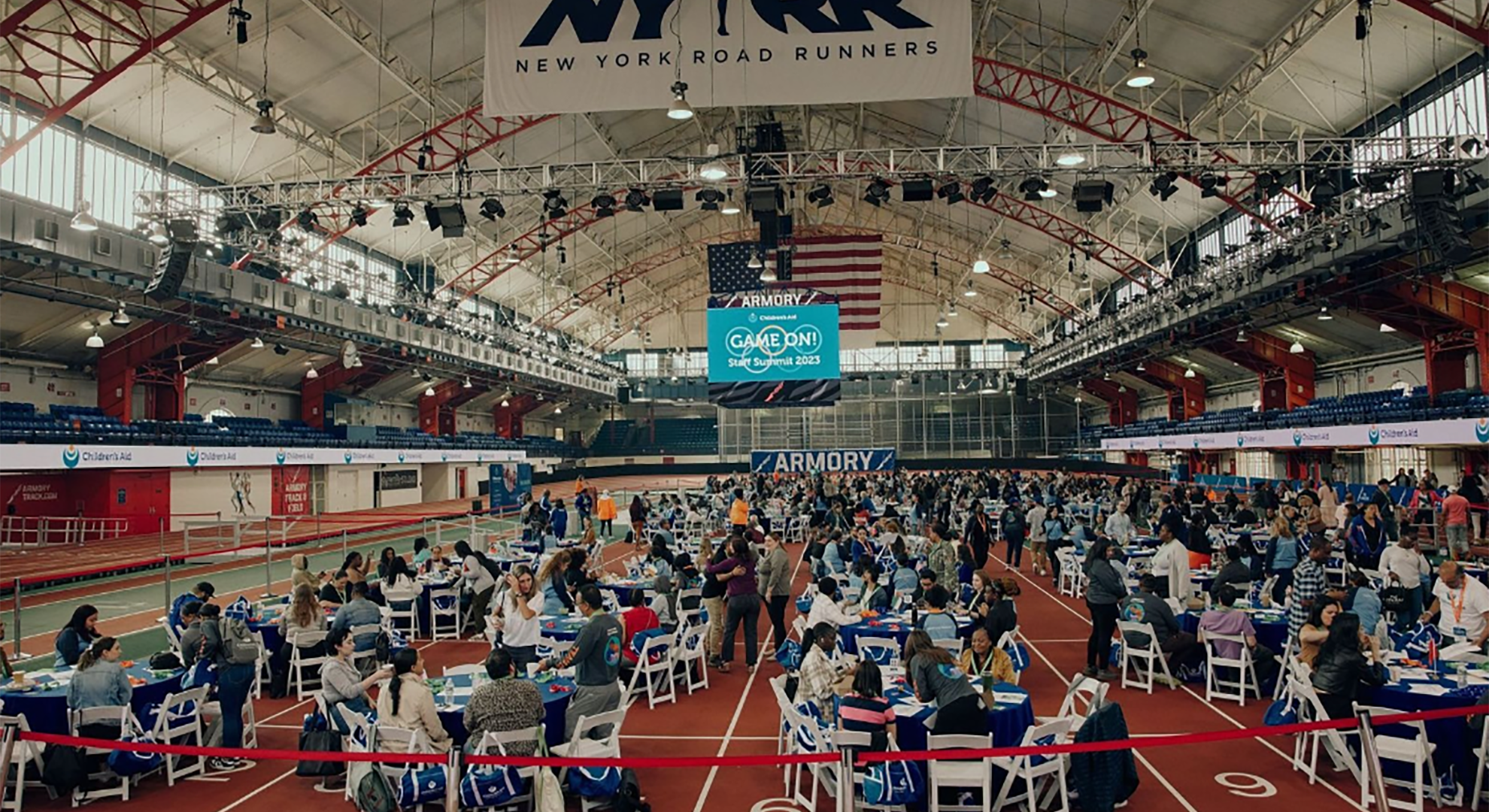 View Digital Team Building Case Study
An email scavenger hunt is a great way to get your team amped up for your event. High achievers will love spotting the easter eggs and clues within each email leading up to the event. Whether it’s a hidden message found in the capitalized letters or a hidden object within the graphics, this scavenger hunt lends a sense of anticipation and promotes creative thinking and problem-solving skills.
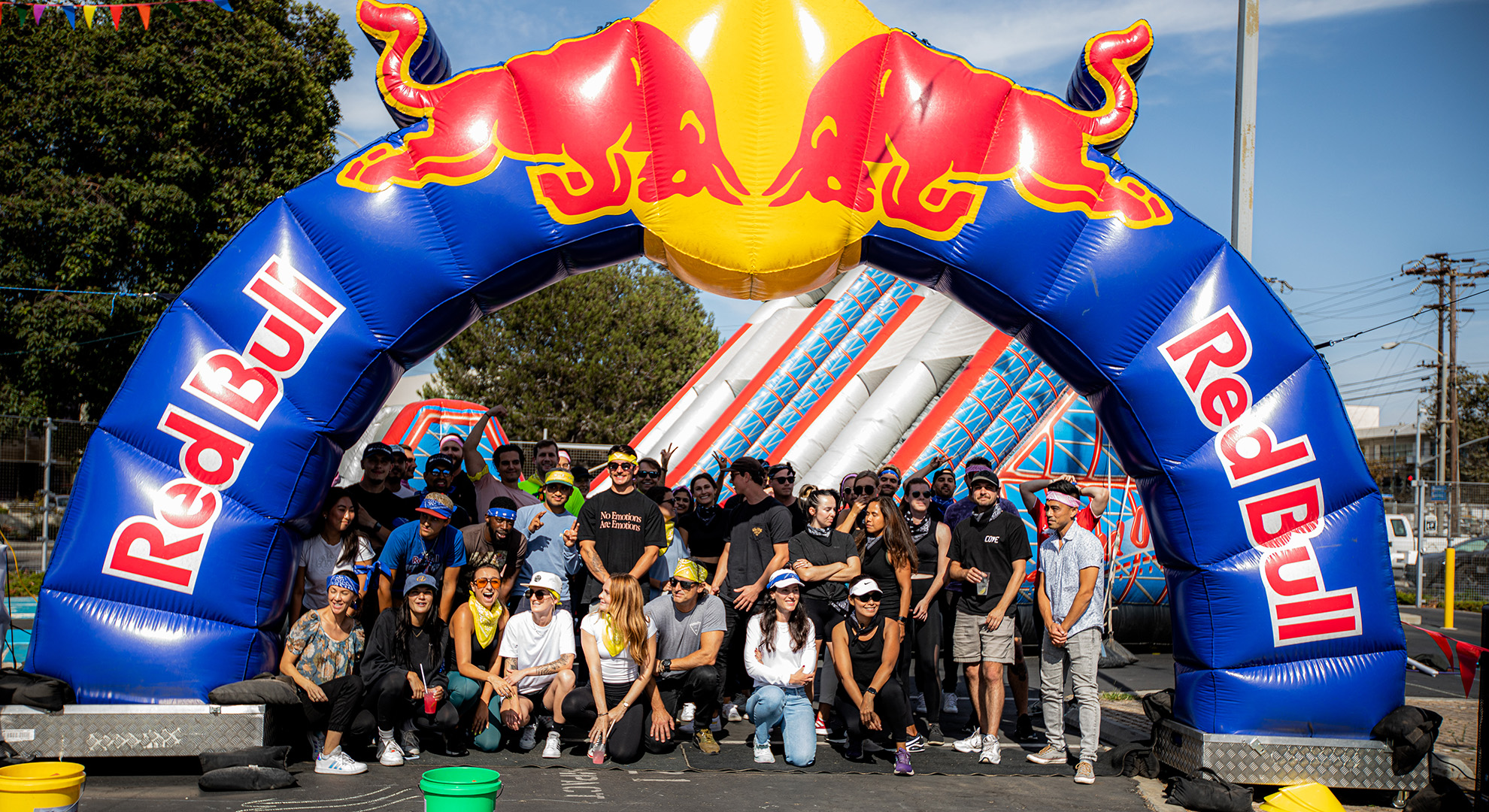
Try a Build a Rube Goldberg Machine
Lead Time
2 – 4 Months
Cost
$$
Groups
20-100+
Focus
Collaboration
Event Guide: The Rube Goldberg Chain-Reaction Challenge
Objective: Unleash engineering creativity by tasking teams to construct a complex contraption that performs a simple task through a series of chain reactions. This activity encourages collaborative problem-solving and showcases participants’ ingenuity.
📋 Step-by-Step Instructions
- Define the Final “Simple Task” Every team must work toward the exact same final action. Keep it simple but satisfying. Great examples include:
- Ringing a bell
- Popping a balloon
- Stapling a piece of paper
- Cracking an egg into a bowl
- Turning on a light switch
- Gather “Junk” and Build Supply Depots Collect a massive pool of random, everyday items. Set them up in a central “supply depot.”
- Kinetic items: Marbles, ping pong balls, toy cars, dominoes, vinyl records.
- Structural items: Cardboard boxes, PVC pipes, paper towel rolls, textbooks, rulers.
- Connectors: Duct tape, string, rubber bands, zip ties, paperclips, magnets.
- Establish Constraints and Rules To make it a true challenge, set specific criteria:
- Minimum steps: The machine must have at least 5 distinct chain reactions before completing the final task.
- Human intervention: Once started, the machine must run entirely on its own. Every time a human has to “help” it along, points are deducted.
- Footprint: Limit the build to a specific area (e.g., must fit on a single standard folding table).
- Phase 1: Storyboarding & Testing Component Blocks Give teams 15 minutes to brainstorm backward. Start with the final task and work toward the beginning. Advise them to test small sections independently (e.g., “Does this ball reliably roll down this cardboard tube and hit this book?”) before trying to link the entire machine together.
- Phase 2: The Integration Chaos (The Build) Give teams 60 to 90 minutes to link their individual tricks into one continuous machine. This is where collaborative problem-solving peaks—teams will experience multiple failures where Step A and Step B work perfectly, but the transition between them fails. Encourage resilience.
- The Grand Finale: Live Demonstrations Gather the entire group around one table at a time. The team captain triggers the first step, and everyone watches the reaction play out. Give each team up to 3 attempts to get a flawless run in case a ball goes rogue.
Unleash engineering creativity by tasking teams to construct a Rube Goldberg Machine, a complex contraption that performs a simple task through a series of chain reactions. This activity encourages collaborative problem-solving and showcases participants’ ingenuity.
For the Physical High Achievers:
Going on an excursion adventure (like BEHR did during their conference) is a great way to excite your high achievers. Whether it’s in the desert or in the mountains, a good excursion focused on exploration is sure to be a blast. We have plenty of great excursion ideas and find that these adventures are always full of fun. Your team will experience team bonding like never before, and make plenty of exciting memories that will last a lifetime.
Physical activities shouldn’t just be about the exertion; they should be about the shared environment and the thrill of a new perspective. A prime example of this is how we utilized the coastline to challenge a team of elite performers…
Collaboration Beyond the Office
Trading track shoes for water shoes, Nike Running took to the California coast for a high-octane Paddleboarding Relay Race. This outing balanced intense physical competition with luxury relaxation, featuring private shuttles and a custom campfire reception at Marina del Rey.
 View Nike Case Study
Try a Sandcastle Competition
Lead Time
3 – 5 Weeks
Cost
$$
Groups
15 – 80
Focus
Coordination
Event Guide: The Master Sculptor Sandcastle Challenge
Objective: Showcase your staff’s creative side by holding a sandcastle-building competition! Bring in a professional sand sculpture artist to give teams a quick lesson, then task them with building their own sand sculptures in a timed competition. This activity is great for showcasing creativity and honing your team’s artistic side.
📋 Step-by-Step Instructions
- Secure the Venue & Permits Choose a beach, lakefront, or an outdoor venue where you can have sand trucked in. Check local municipal rules—many public beaches require a temporary event permit for corporate gatherings, especially if you are setting up tents or sound systems.
- The Expert Masterclass (30 Minutes) Before handing out tools, have your professional sand artist run a live demonstration. The artist should teach the team the fundamental secrets of sand sculpting:
- The Water-to-Sand Ratio: The secret to massive sculptures is heavily compacted, soaking-wet sand.
- The “Pounder” Technique: How to use forms (buckets with the bottoms cut out) to pack sand dense enough to carve.
- Carving Top-Down: Always carve details from the top of the structure downward so falling sand doesn’t ruin finished work.
- Distribute the Sculpting Toolkits Provide each team with a designated building plot (e.g., a 10×10 foot square) and a toolkit. A great corporate toolkit includes:
- 2–3 large 5-gallon buckets (for hauling water)
- Bottomless buckets or construction cones (to use as packing molds)
- Plastic shovels and trowels
- Artistic detailing tools: Plastic knives, paintbrushes, straws (for blowing away loose sand), and melon ballers.
- Set the Theme & Clock Give teams a loose theme to spark creativity but allow for artistic interpretation (e.g., “Futuristic Architecture,” “Mythical Creatures,” or “Your Company’s Next Big Idea”). Set a countdown timer for 90 to 120 minutes.
- Manage the “Work Infrastructure” Sand sculpting is surprisingly exhausting physical work. Keep teams hydrated by setting up a shade tent near each plot and stocking coolers with water and sports drinks. Play upbeat music over a portable speaker to keep the energy high.
- Judging & The “Tide Rise” Photo-Op Bring the professional artist back to act as the head judge alongside your leadership team. Judge the sculptures on structural height, attention to detail, and adherence to the theme. Take a drone photo or a panoramic group shot with everyone standing behind their creations before the wind or tide takes them away.
CASE STUDY:
We transformed a milestone incentive trip on the shores of Will Rogers State Beach into a sun-drenched, bilingual team-building arena for Spain-based Kern Pharma. To channel their natural drive into an artistic showdown, we introduced a high-stakes “Sandcastle Competition.” Guided by a professional master sculptor who shared the structural science of sand architecture, teams raced against a 60-minute timer to design, excavate, and execute sprawling masterpieces—ranging from perfectly fortified traditional fortresses to full-scale living mermaid sculptures carved right out of the coastline.
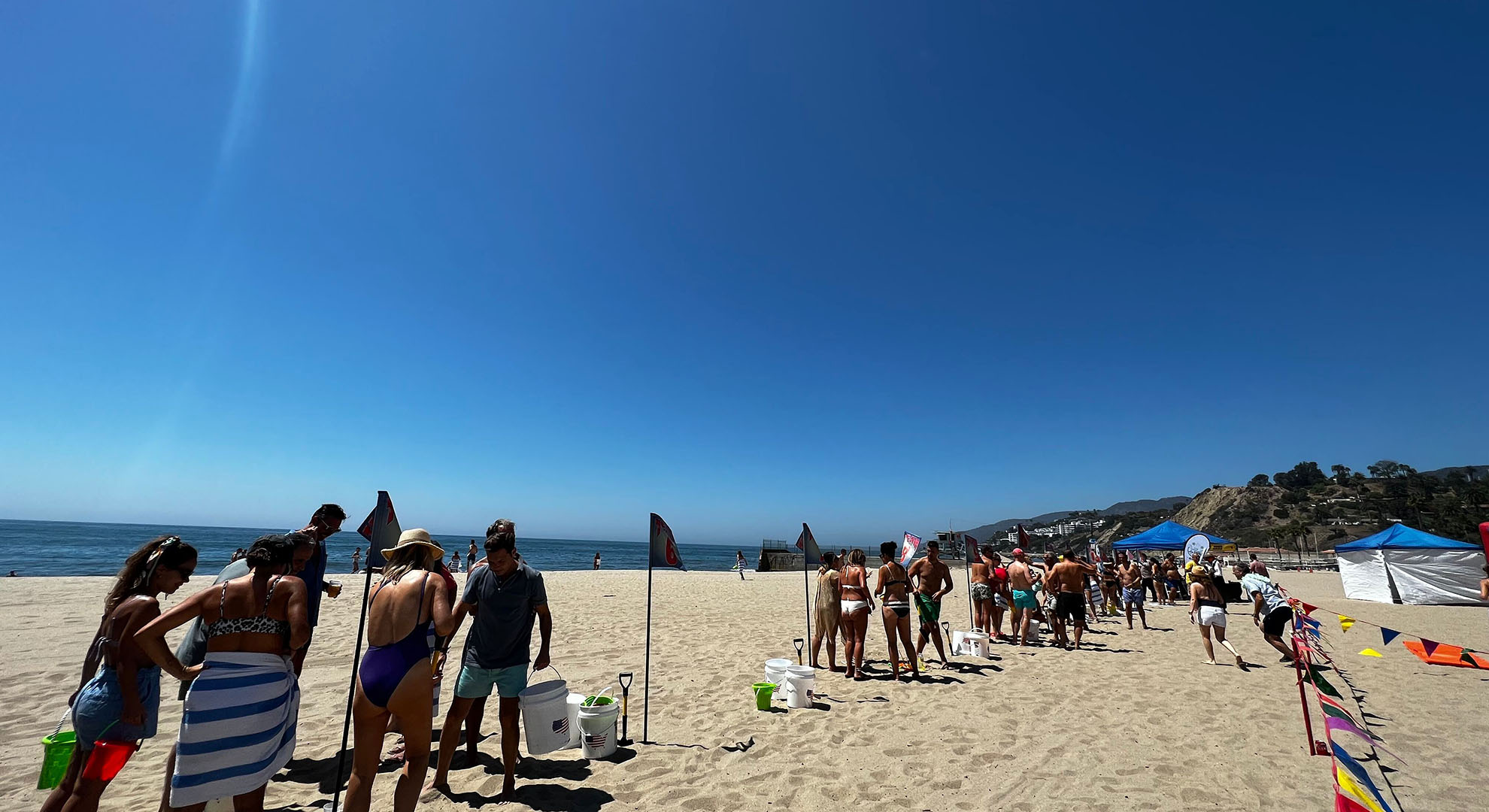 View Beach Picnic Case Study
Showcase your staff’s creative side by holding a sandcastle-building competition! Bring in a professional sand sculpture artist to give teams a quick lesson, then task them with building their own sand sculptures in a timed competition. This activity is great for showcasing creativity and honing your team’s artistic side.
Try Paddleboarding
Lead Time
2 – 4 Months
Cost
$$
Groups
20-100+
Focus
Coordination
Event Guide: The Nature-Infused Paddleboard Adventure
Objective: Reconnect your team with nature by taking them paddleboarding! Whether you race across a body of water or simply task teams to explore, unwind, and bond, this activity is great for those who like a unique and challenging experience. This activity promotes collaboration, team bonding, and teamwork.
📋 Step-by-Step Instructions
- Select the Right Environment For a corporate event, skip the wavy ocean beaches. Opt for a calm, flat-water location like a quiet lake, a lazy river, or a protected harbor. High winds and choppy water will frustrate beginners and turn a bonding event into an exhausting workout.
- Partner with Professionals & Check Gear Rent boards from a reputable local outfitter that provides an on-site guide. Ensure the outfitter provides the necessary safety gear for every single participant:
- A properly fitted Life Jacket (PFD)
- An ankle leash (so the board doesn’t float away if they fall)
- A paddle adjusted to their specific height
- The 10-Minute “Dry Land” Safety Clinic Before anyone touches the water, have the guide run a quick demonstration on the grass or sand. Cover the absolute basics:
- How to transition from kneeling to standing.
- How to use the paddle as a brace for stability.
- The golden rule: If you feel like you are falling, fall away from the board into the water to avoid hitting it.
- Phase 1: The Acclimation & Unwind Cruise (30 Mins) Let everyone get their “board legs” at their own pace. Encourage the natural athletes to help those who are a bit more nervous. This initial phase should be purely about exploring, enjoying nature, and chatting across boards while drifting.
- Phase 2: The Teamwork Challenges (30 Mins) Once everyone is comfortable, introduce lighthearted, collaborative challenges to spark teamwork:
- The Paddleboard Raft: Task the entire group with lining up side-by-side, holding onto each other’s boards to form one giant, unbroken floating raft without anyone falling in.
- The Tandem Swap: For the adventurous, have two participants try to carefully switch boards while out on the water.
- The Slow-Mo Race: Challenge teams to race to a finish line, but the last person to cross without falling or stopping wins. It requires incredible balance and fine motor control.
- The Shoreline Decompression Have a designated spot on the shore waiting with dry towels, a beach fire or picnic tables, and cold refreshments. Spending 30 minutes swapping stories about who wiped out or who had the best balance is where the true team bonding solidifies.
Reconnect your team with nature by taking them paddleboarding! Whether you race across a body of water or simply task teams to explore, unwind, and bond, this activity is great for those who like a unique and challenging experience. This activity promotes collaboration, team bonding, and teamwork.
Try a Fishing Expedition
Lead Time
4 – 6 Weeks
Cost
$$
Groups
6 – 20
Focus
Coordination
Event Guide: The Great Charter Fishing Tournament
Objective: Take your team out on the water to see who can catch the most, or the biggest, fish in a set period of time. This activity promotes team bonding, friendly competition, and patience.
📋 Step-by-Step Instructions
- The Dockside Weigh-In & Cookout The event doesn’t end when the engines cut out. Meet back at the marina scale for the official weigh-in to crown your winners. Many corporate charters partner with dockside restaurants that will clean, fillet, and cook your team’s fresh catch right on the spot for a celebratory “Hook & Cook” lunch.
- Choose Your Fishing Style (Match to Your Group) Don’t just book the first boat you see. Match the style of fishing to your team’s general patience and iron-stomach levels:
- Inshore / Bay Fishing: Best for beginners and larger groups. The waters stay calm (less seasickness), the boat stays close to land, and you get frequent, fast bites from species like redfish, speckled trout, or bass. Captain Experiences
- Deep Sea / Offshore Trolling: Best for smaller, adventurous teams looking for a bucket-list challenge. You’ll head miles out to chase massive pelagic species like Mahi Mahi, Tuna, or Marlin.
- Secure a Vetted Charter & Captain Unless you are using an all-inclusive Destination Management Company (DMC) to source local vendors, book a charter with verified licenses and USCG-certified captains. Ensure the charter provides all rod setups, live bait, tackle, and—critically—handles the local group fishing licenses.
- Divide into “Boat Crews” Since most standard charter boats have passenger limits (often strictly capped at 6 passengers for smaller sportfishers, or 15–30 for larger multi-passenger “party” boats), divide your staff into balanced crews ahead of time. Mix up executive leadership with junior staff across the boats to maximize cross-department networking.
- Establish the Tournament Metrics Before pushing off from the dock, announce the official categories. Keep it fun so everyone stays engaged:
- 🏆 The Grand Prize: Heaviest single fish caught.
- 🐟 The Quantity Award: Most total fish caught by an individual.
- 🐡 The “Wild Card”: Most unique or strangest-looking species dragged up.
- ⚓ The Anchor Award: The most patient angler who got the fewest bites but kept a great attitude.
- Let the Captains and Mates Guide the Way Once on the water, let the first mates do their job. They will coach beginners on how to drop a line, feel for a bite, and reel properly. This allows you to focus purely on hanging out with your team and cheering when someone hooks a big one.
Whether you’re on the Pacific Ocean or at one of the Great Lakes, fishing is a beloved pastime nationwide. Take your team out on the water to see who can catch the most, or the biggest, fish in a set period of time. This activity promotes team bonding, friendly competition, and patience. Consider planning a trip to the best fishing in the world. Our destination management company can handle the logistics for you.
PRO TIP: Combine with another activity to make it even more exciting, like writing a jingle (see below) while waiting for a catch.
Try Skeet Shooting
Lead Time
2 – 4 Months
Cost
$$
Groups
20-100+
Focus
Coordination
Event Guide: The Clay Target Showdown
Objective: Promote team bonding and get outdoors for an afternoon with your colleagues. Physically inclined high achievers will love the challenge of seeing who can shoot the most clay pigeons.
📋 Step-by-Step Instructions
- Partner with an Accredited Gun Club For corporate outings, always book a private event at a professional, fully staffed gun club or shooting range. Ensure they provide dedicated, certified Range Safety Officers (RSOs) who will remain with your group the entire time to manage the firearms and coach participants.
- The Absolute Mandate: Safe Zone Briefing Before anyone touches a firearm, the RSOs must conduct a mandatory safety clinic. This is where your team learns the unbreakable rules of the range:
- Treat every firearm as if it is loaded.
- Never point a firearm at anything you don’t intend to shoot.
- Keep your finger off the trigger until you are on the stand and ready to shoot.
- Ear and eye protection must stay on at all times on the field.
- Provide Proper Fitting and Equipment Ensure the club provides a variety of shotgun gauges. While a 12-gauge is standard, a 20-gauge or 28-gauge shotgun is highly recommended for beginners because they offer significantly less shoulder recoil while still being highly effective at shattering clay targets.
- Run a One-on-One Coaching Phase Skeet shooting can be intimidating for beginners. Have your RSOs work one-on-one with each team member on the shooting stand. They will teach them the “lead” technique—aiming slightly ahead of the moving clay target rather than directly at it, allowing the shot pattern to intersect with the flying bird.
- Launch the Team Tournament Divide your staff into teams of 4 to 5. Set up a structured rotation where each person gets a set number of shots (e.g., 10 or 15 targets) from different stations. Have teammates track scores on a clipboard, cheering loudly for every satisfying orange cloud of a shattered clay.
- The Pavilion Reception Conclude the day at the club’s outdoor pavilion or lodge. Crown your “Top Gun” (individual highest score) and “Top Squad” (team with the most combined hits).
🛡️ Strict Corporate Event Safety Protocols
Because firearms are involved, you must adhere to a strict operational boundary regarding alcohol consumption:
🛑 The Zero-Tolerance Alcohol Rule: Absolutely no alcohol may be served or consumed before or during the shooting portion of the event. Gun clubs strictly enforce this policy, and any participant who has had a drink will be immediately barred from the field. Save the celebratory craft beers or catering for the pavilion reception after all shotguns have been cleaned, cased, and safely locked away.
Skeet shooting is a fun way to promote team bonding and get outdoors for an afternoon with your colleagues. Physically inclined high achievers will love the challenge of seeing who can shoot the most clay pigeons.
Try a Challenge Course/Ropes Course
Lead Time
4 – 8 Weeks
Cost
$$$
Groups
8 – 40
Focus
Collaboration
Event Guide: The Trust & Resilience Obstacle Challenge
Objective: Overcome physical and mental obstacles together, building trust and communication through shared experiences. This outdoor activity promotes teamwork, resilience, and leadership skills.
📋 Step-by-Step Instructions
- Partner with an Experiential Challenge Course Book a professional venue that offers both “Low Ropes” (ground-level group puzzles) and “High Ropes” (aerial challenges). Ensure the course features certified facilitators who specialize in corporate team dynamics, not just recreation.
- The “Challenge by Choice” Framing Before stepping onto the course, establish the psychological safety rule: Challenge by Choice. This means every individual decides their own limit. If someone is terrified of heights, their triumph might be stepping onto the first platform, while a teammate might push all the way to the zipline. Both goals are equally valid.
- Phase 1: Low-Ropes Alignment (The Mental Warm-Up) Start on the ground with problem-solving obstacles that cannot be completed alone.
- The Whale Watch: The entire team must stand on a massive, pivoting wooden platform and figure out how to balance it perfectly level for 30 seconds without anyone touching the ground.
- The Spiderweb: The team must pass every member through a web of ropes without touching the strings, requiring physical lifting and careful coordination.
- Phase 2: High-Ropes & Belay Trust (The Emotional Stretch) Move to the elevated elements. This is where trust is explicitly built. Pair team members up: one person scales the aerial elements (bridges, tightropes, logs) while their partner serves as part of the “belay team” on the ground, managing the safety ropes that keep them secure.
- Phase 3: The Leap of Faith (Leadership Reflection) Conclude with a milestone challenge, like a trapeze jump or a giant tandem swing. This element focuses heavily on leadership and peer encouragement. The team on the ground acts as an active support system, shouting clear directions and cheering to help the climber push past their mental hesitation.
- The Structured Facilitator Debrief The magic of an obstacle course happens after the physical exertion stops. Gather in a circle with your facilitator to connect the physical experience back to office reality:
- “When you felt stuck on that wire, what kind of communication helped you move forward?”
- “How can we bring that same level of explicit trust and support into our next major project launch?”
🧠 Navigating the Three Growth Zones
A great facilitator watches how participants handle stress during the course. Every individual will navigate three distinct mental states:
The Comfort Zone: Safe and completely stress-free. No new skills or trust are developed here.
The Stretch Zone: This is the sweet spot. Participants feel a healthy level of adrenaline and vulnerability, pushing their boundaries but remaining focused enough to learn and bond.
The Panic Zone: High anxiety takes over, and the brain goes into pure survival mode. The team’s goal is to keep each other out of the Panic Zone through constant encouragement.
Overcome physical and mental obstacles together, building trust and communication through shared experiences. This outdoor activity promotes teamwork, resilience, and leadership skills
Try a Cooking Class
Lead Time
1 – 2 Months
Cost
$$
Groups
12-40
Focus
Collaboration
Event Guide: The Culinary Collaboration Masterclass
Objective: Learn a new skill and work together to prepare a delicious meal. Celebrate collaborative achievement through this hands-on activity that emphasizes teamwork, communication, and creativity.
📋 Step-by-Step Instructions
- Partner with a Specialized Culinary School or Chef Book a venue or host an in-office pop-up with a professional sushi chef. Ensure they provide a fully prepped, mobile assembly line. The chef should handle the heavy baseline preparation—like brewing the seasoned vinegar and cooking the massive batches of sushi rice—so your team can dive straight into the technical, creative work.
- The Chef’s Masterclass & Technique Demo (20 Mins) Before handing out ingredients, have the chef demonstrate the core fundamentals of sushi construction:
- Rice Management: The exact pressure needed to spread shari (sushi rice) evenly across the nori (seaweed sheet) without smashing the grains.
- The Roll Tuck: How to use the makisu (bamboo rolling mat) to firmly tuck the fillings into a perfect, uniform cylinder.
- The Clean Cut: The precise method of wiping and wetting a sharp yanagiba (sushi knife) before every single slice to prevent tearing.
- Distribute Interactive Stations Divide your staff into cooking teams of 2 to 4 per table. Equip each station with high-quality, fresh ingredients: sushi-grade fish (tuna, salmon), crisp cucumbers, avocados, scallions, sesame seeds, spicy mayo, and unagi sauce.
- Phase 1: The Foundations Skill-Build (30 Mins) Have teams practice the classic styles side-by-side with the chef’s instruction:
- Maki: Traditional rolls with nori on the outside.
- Uramaki: Inside-out rolls (rice on the outside), which require plastic-wrapping the bamboo mat and mastering an even shake of sesame seeds.
- Nigiri: Slicing raw fish fillets and shaping the perfect oblong block of hand-warmed rice beneath it.
- Phase 2: The “Signature Roll” Creative Challenge (20 Mins) Now turn up the creativity. Challenge each team to collaborate on a completely unique “Signature Team Roll.” They must invent a name for it, determine a balanced flavor profile, and carefully style the presentation plate using artful drizzles of sauces and garnishes.
- The Banquet & Judging Session Have the master chef walk table to table to evaluate the creations based on structural integrity (does it hold together?), presentation symmetry, and creative flavor combinations. Once the winners are declared, everyone sits down together to enjoy the massive, collaborative feast they just constructed.
Learn a new skill and work together to prepare a delicious meal. Sushi cooking classes, for example, are one of our top ideas for San Francisco team building events. Celebrate collaborative achievement through this hands-on activity that emphasizes teamwork, communication, and creativity.
Try a Baking Competition
Lead Time
3 – 5 Weeks
Cost
$$$
Groups
12 – 36
Focus
Coordination
Event Guide: The “Nailed It!” Baking Showdown
Objective: Teams work together to recreate overly complex, professional confections under a tight clock. They are judged based on creativity, tastiness, and just how close (or wildly far off) they got to the original masterpiece.
📋 Step-by-Step Instructions
- Partner with a Specialized Culinary School or Chef Book a venue or host an in-office pop-up with a professional sushi chef. Ensure they provide a fully prepped, mobile assembly line. The chef should handle the heavy baseline preparation—like brewing the seasoned vinegar and cooking the massive batches of sushi rice—so your team can dive straight into the technical, creative work.
- The Chef’s Masterclass & Technique Demo (20 Mins) Before handing out ingredients, have the chef demonstrate the core fundamentals of sushi construction:
- Rice Management: The exact pressure needed to spread shari (sushi rice) evenly across the nori (seaweed sheet) without smashing the grains.
- The Roll Tuck: How to use the makisu (bamboo rolling mat) to firmly tuck the fillings into a perfect, uniform cylinder.
- The Clean Cut: The precise method of wiping and wetting a sharp yanagiba (sushi knife) before every single slice to prevent tearing.
- Distribute Interactive Stations Divide your staff into cooking teams of 2 to 4 per table. Equip each station with high-quality, fresh ingredients: sushi-grade fish (tuna, salmon), crisp cucumbers, avocados, scallions, sesame seeds, spicy mayo, and unagi sauce.
- Phase 1: The Foundations Skill-Build (30 Mins) Have teams practice the classic styles side-by-side with the chef’s instruction:
- Maki: Traditional rolls with nori on the outside.
- Uramaki: Inside-out rolls (rice on the outside), which require plastic-wrapping the bamboo mat and mastering an even shake of sesame seeds.
- Nigiri: Slicing raw fish fillets and shaping the perfect oblong block of hand-warmed rice beneath it.
- Phase 2: The “Signature Roll” Creative Challenge (20 Mins) Now turn up the creativity. Challenge each team to collaborate on a completely unique “Signature Team Roll.” They must invent a name for it, determine a balanced flavor profile, and carefully style the presentation plate using artful drizzles of sauces and garnishes.
- The Banquet & Judging Session Have the master chef walk table to table to evaluate the creations based on structural integrity (does it hold together?), presentation symmetry, and creative flavor combinations. Once the winners are declared, everyone sits down together to enjoy the massive, collaborative feast they just constructed.
Feel like you’re on the Netflix show NailedIt! Players will work as teams to bake their best confections and are judged based on creativity, tastiness, and other rankings. This activity is not just enriching but strengthens creativity, communication, and teamwork.
Creative & Out-of-the-Box:
Creative expression allows high-performers to flex a different set of mental muscles. By bringing in experts to guide the process, you turn a simple beach day into a high-level masterclass in collaboration…
Try Building a Cardboard City
Lead Time
2 – 3 Weeks
Cost
$
Groups
20 – 100+
Focus
Collaboration
Event Guide: The Cardboard Metropolis Challenge
Objective: Provide limited materials and let imaginations run wild as teams design and build a cardboard metropolis. This creative and collaborative activity encourages innovative thinking and teamwork.
📋 Step-by-Step Instructions
- Map Out the Grid (The Urban Plan) Before the teams arrive, tape out a large grid on the floor of your event space using blue painter’s tape. Divide the grid into distinct “zones” or neighborhoods (e.g., Financial District, Green Park Infrastructure, Transportation Hub, Residential Sector).
- Distribute the “Rationed” Materials To force innovative thinking, give every team the exact same limited baseline kit. Do not give them unlimited access to materials. A perfect kit includes:
- 4–5 large, flat-packed cardboard shipping boxes
- 2 rolls of heavy-duty packing tape or masking tape
- 3 cardboard poster tubes
- Safety box cutters or specialized cardboard saws (like Canary cutters)
- A single marker for drafting blueprints directly onto the cardboard
- Phase 1: Zoning & Architectural Pitch (15 Mins) Assign each team a specific zone on your floor grid. Before they cut a single piece of cardboard, give them 15 minutes to brainstorm their zone’s primary landmark. They must quickly answer: What is our zone’s anchor building, and how does it connect to the neighboring zones? This forces teams to talk across boundaries to ensure the city makes sense as a whole.
- Phase 2: The Structural Build (60–90 Mins) Let the building begin. Teams will quickly realize that cardboard behaves differently depending on how it’s manipulated. They will have to solve structural problems on the fly:
- The Fold: Scoring cardboard to create structural pillars and arches.
- The Weight: Distributing weight so towering structures don’t buckle or lean.
- The Scale: Making sure their buildings feel proportional to the rest of the growing metropolis.
- Phase 3: The Infrastructure Integration (20 Mins) Stop individual builds for the final 20 minutes. Challenge all teams to work together to construct the connective tissue of the city: building cardboard bridges over the grid lines, running transit tracks between zones, or creating public plazas where their neighborhoods meet.
- The Mayor’s Walkthrough & Debrief Have the entire group walk through the completed, room-spanning cardboard city. Invite a designated “City Planner” from each team to pitch their neighborhood’s design, highlighting their most creative architectural solutions.
Provide limited materials and let imaginations run wild as teams design and build a cardboard metropolis. This creative and collaborative activity encourages innovative thinking and teamwork.
Try a Cardboard Boat Race
Lead Time
2 – 3 Months
Cost
$$
Groups
15-60
Focus
Collaboration
Event Guide: The Cardboard Regatta
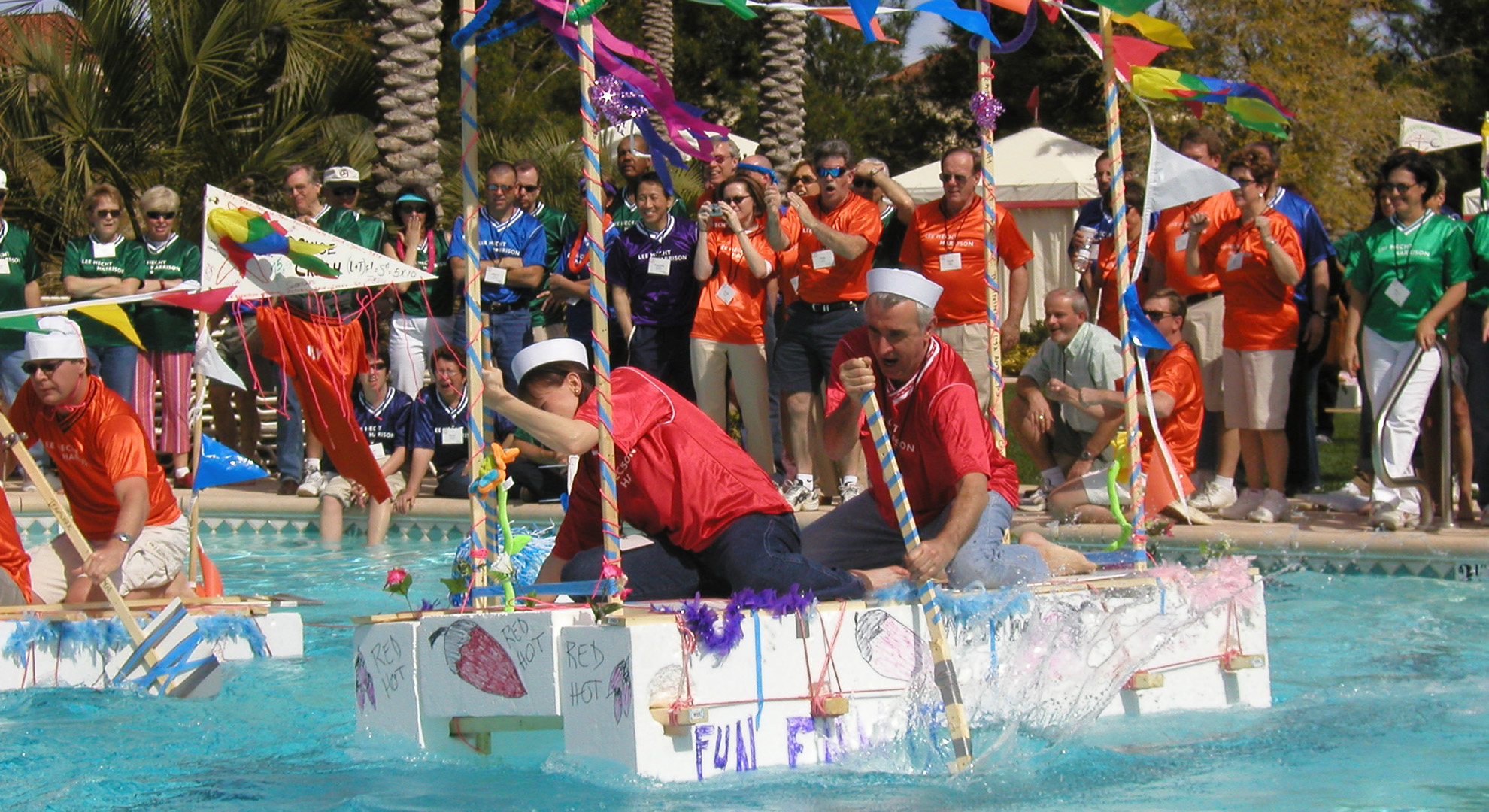
Objective: Teams are given cardboard boxes and duct tape to construct a water-worthy vessel. A timed assembly adds a layer of high-energy excitement, followed by a live race across a pool or pond to see whose engineering holds up under pressure.
📋 Step-by-Step Instructions
- Secure a Safe Aquatic Venue Book a venue with a calm body of water—a community swimming pool, a calm resort pond, or a slow-moving lake inlet. Ensure the venue allows cardboard materials in the water and that on-site lifeguards are present for the racing phase.
- Distribute the Materials (Strictly Rationed) To ensure a fair and safe race, give every team the exact same building materials. Do not let them bring outside supplies. A standard kit includes:
- 3–4 large, heavy-duty appliance boxes (refrigerator or washing machine boxes work best because they use thick, multi-walled cardboard).
- 4 rolls of heavy-duty duct tape (this is their only waterproofing agent).
- 2 plastic utility knives or safety cardboard saws.
- A marker and yardstick for measuring.
- Phase 1: The Blueprint Phase (15 Mins) Before handing over the tape, give teams 15 minutes to sketch their design. They must calculate a crucial engineering problem: Displacement. The boat needs enough surface area and high enough sidewalls to displace the weight of the team member who will be paddling it without capsizing instantly.
- Phase 2: The Assembly Clock (45–60 Mins) Start the countdown timer. The construction zone will become a flurry of activity. Teams must divide and conquer: one group scores and folds the main hull, another reinforces the floor seams, and a third creates structural cross-beams to prevent the sidewalls from collapsing inward under water pressure.💡 The Waterproofing Rule: Teams can use the duct tape to seal seams and reinforce the bottom of the hull, but wrapping the entire boat in tape should be discouraged by material limits—they must strategically place tape where the water pressure will be greatest.
- Phase 3: The Presentation & Crew Selection Before hitting the water, hold a “Boat Show.” Each team presents their vessel, explains its name, and nominates their “Designated Captain”—the brave soul who will actually sit in the boat and paddle it. Give the Captain a life jacket and a standard canoe paddle.
- The Great Regatta Race Line the boats up at the water’s edge. On the whistle, the Captains board their vessels and paddle toward a buoy (or across the pool) and back. Teammates line the shore, cheering wildly.
- The Twist: Some boats will glide beautifully; others will immediately disintegrate, banana-peel apart, or roll over. Embrace the chaos—the spectacular failures are often the most memorable part of the event.
To play this game, teams are given cardboard boxes and duct tape to waterproof them. A timed assembly of the boats adds one layer of excitement, and then a boat race across a pool or pond adds another. This team building activity promotes collaboration, teamwork, and problem-solving skills and serves as a memorable experience for any event.
Try a Movie Making Challenge
Lead Time
3 – 5 Weeks
Cost
$$
Groups
12 – 60
Focus
Communication
Event Guide: The 3-Hour Film Festival Challenge
Objective: Write, shoot, and edit a short film within a set time limit. Showcase storytelling and collaboration skills as teams work together to create a compelling cinematic experience.
📋 Step-by-Step Instructions
- Establish the Creative Constraints To level the playing field and prevent teams from preparing scripts ahead of time, announce a set of mandatory elements at the kickoff. Every film must include:
- A Specific Genre: Assign different genres to each team (e.g., Film Noir, Sci-Fi, Mockumentary, Horror, or Telenovela).
- A Prop: An everyday item that must feature prominently in the plot (e.g., a stapler, a coffee mug, or a rubber chicken).
- A Line of Dialogue: A specific sentence that must be spoken aloud (e.g., “We’re going to need a bigger spreadsheet,” or “I didn’t think anyone saw me”).
- Phase 1: Pre-Production & Scripting (30 Mins) Teams hit the clock. They must rapidly brainstorm a concept, write a loose script or storyboard, and delegate roles. Every team needs a Director (project manager), a Cinematographer (camera operator), an Editor, and Actors (everyone else!).
- Phase 2: Production / The Shoot (60 Mins) Teams scatter across your venue or office to shoot their scenes.
- The Gear: No fancy equipment required. Modern smartphones shoot incredible 4K video.
- The Rule: Remind teams to shoot short, focused takes and “edit in their heads” to save time later.
- Phase 3: Post-Production & Editing (60 Mins) The crew returns to headquarters. The Editor takes the mobile footage and stitches it together using user-friendly, free mobile or desktop editing apps (like CapCut, iMovie, or InShot). This is where the team adds royalty-free music, dramatic sound effects, and title cards.
- The Grand Screening & Red Carpet (30 Mins) Gather everyone in a central room, dim the lights, and project the finished short films on a big screen. Hand out popcorn and let the teams watch their colleagues’ cinematic masterpieces come to life.
Write, shoot, and edit a short film within a set time limit. Showcase storytelling and collaboration skills as teams work together to create a compelling cinematic experience.
PRO TIP: Top off the experience by featuring the top videos in your next all-hands meeting or holiday party.
Try a Board Game Design Workshop
Lead Time
1 – 2 Months
Cost
$$
Groups
15-50
Focus
Collaboration
Event Guide: The Board Game Design Workshop
Objective: Channel strategic minds and creativity to design a brand-new board game from scratch. This workshop encourages innovative thinking, system mechanics balancing, visual design, and collaborative playtesting.
📋 Step-by-Step Instructions
- Set Up the “White-Label” Prototype Kits Provide each team with a completely blank canvas. You can source unprinted, generic board game components online or assemble them yourself. Every team station should be equipped with:
- A blank, quad-fold game board and a deck of blank playing cards
- A variety of generic game pieces (meeples, plastic poker chips, multi-sided dice, play money)
- A toolkit of creative supplies (colored markers, scissors, index cards, sticky notes)
- Phase 1: Choose Theme & Core Mechanics (20 Mins) Before touching the pieces, teams must define the core pillars of their game. To spark ideas, have them select one Theme and one Core Mechanic from a pre-determined matrix:
- Themes: Outer Space Colonization, Corporate Office Survival, Mythological Heist, Underwater Exploration.
- Mechanics: Worker Placement, Deck Building, Area Control, Resource Management, Co-operative Strategy.
- Phase 2: Establish the Economy & Rulebook (40 Mins) This is where the strategic minds shine. Teams must draft a simple, one-page rulebook that defines the logic of their world. They need to answer:
- How do players win? (e.g., Reach 100 points, eliminate opponents, or complete a shared mission).
- What can a player do on their turn? (e.g., Roll and move, draw two cards, or trade a resource).
- The Balance Check: Is there a “catch-up mechanic” so players who fall behind early don’t lose interest?
- Phase 3: Visual Design & Prototyping (30 Mins) Once the logic is set, the artistic side takes over. Teams color and map out the board layout, write custom event descriptions on the blank cards, and style their game pieces.
- Phase 4: The Alpha Playtest & Stress Test (30 Mins) A game never works perfectly on paper. Have teams run a “live fire” test of their own game for 15 minutes. They will quickly spot flaws: “Wait, this card is way too powerful,” or “It takes too long to get across the board.” Give them 15 minutes to quickly rewrite rules and patch the bugs.
- The “Publishers Pitch” & Alpha Swap Instead of just playing their own games, have Team A swap tables with Team B. Team A must read Team B’s rulebook and try to play their game for 20 minutes without any verbal help from the creators. This is the ultimate test of clear communication and documentation.
Channel strategic minds and creativity to design a new board game. This workshop encourages innovative thinking, collaboration, and the development of a unique and engaging game.
PRO TIP: Have the final board games printed and branded then sent out to the company as gifts.
Try Creating a Jingle
Lead Time
1 – 2 Weeks
Cost
$
Groups
10 – 100+
Focus
Communication
Event Guide: The Ultimate Corporate Jingle Challenge
Objective: Challenge your team’s musical skills by tasking them with writing, performing, and filming a catchy jingle about a given subject. Showcase the most creative ones at your next company gathering to celebrate your team’s creativity, ingenuity, and imagination.
📋 Step-by-Step Instructions
- Assign the “Mystery Products” To keep things highly entertaining, assign each team a specific topic or product to write their jingle about. You can use real internal company initiatives or hilariously mundane office staples:
- Option A (Internal): The launch of the new IT helpdesk ticketing system.
- Option B (Mundane): The legendary battle over who leaves empty k-cups in the breakroom coffee machine.
- Option C (Absurd): A fake infomercial product, like “Deodorant for Office Chairs.”
- Distribute the “Noise-Maker” Kits Provide each team with an array of simple, accessible musical tools. Do not assume everyone plays guitar or piano. A great jingle kit includes:
- Rhythm tools: Egg shakers, tambourines, plastic buckets (for drums), and triangles.
- Melody shortcuts: A cheap kazoo or a mini toy keyboard.
- Digital lifelines: A tablet or smartphone pre-loaded with user-friendly loop apps like GarageBand, BandLab, or native TikTok/Reels audio tracks.
- Phase 1: The Brainstorm & Lyric Hook (30 Mins) Teams hit the clock. The goal of a jingle is brevity and repetition. Instruct teams to pick an existing, universally known melody to parody (e.g., Jingle Bells, Ice Ice Baby, or a popular cartoon theme song) and rewrite the lyrics. They must focus on creating a “Brainworm”—a hook so catchy it gets stuck in everyone’s head for days.
- Phase 2: Rehearsal & Recording (45 Mins) Once the lyrics are locked, teams rehearse their performance. They don’t just need singers; they need a rhythm section, a “hype person” to yell ad-libs, and a director to film the performance on a smartphone.📱 Pro-Tip: Encourage teams to treat it like a mini music video or a viral social media trend video rather than a stiff live performance.
- Phase 3: The Post-Production Polish (30 Mins) The team’s designated editor takes the mobile footage and quickly drops it into a free app (like CapCut or InShot) to add bold on-screen lyrics, fun filters, and sound effects to maximize the comedic timing.
- The Red Carpet Screening (or Holiday Party Feature) Collect all the finished jingle videos. Pop some popcorn, dim the lights, and screen them all for the entire company. The sheer hilarity of watching colleagues aggressively playing kazoos and singing about spreadsheets makes for an unforgettable holiday party or quarterly review highlight reel.
Challenge your team’s musical skills by tasking them with writing, performing, and filming a jingle about a given subject. Showcase the most creative ones at your next holiday party! This activity challenges your team’s creativity, ingenuity, and imagination while being a memorable experience for everyone.
Try a Tree Planting Competition
Lead Time
2 – 3 Months
Cost
$$
Groups
20-100+
Focus
Coordination
Event Guide: The Eco-Stewardship Tree-Planting Sprint
Objective: Give back to the environment during team building by holding a tree-planting competition! Teams are given a set number of trees to plant, and whichever team plants them the fastest wins while promoting eco-consciousness and environmental stewardship.
📋 Step-by-Step Instructions
- Partner with Local Conservation Experts Never just buy saplings and dig holes at a random public park. Partner with a local forestry department, a non-profit conservation group, or a community garden. They will provide the land, select native tree species that will actually thrive in the local ecosystem, and determine the optimal layout for planting.
- The “Arborist Masterclass” (15 Minutes) Before anyone touches a shovel, a professional forester must demonstrate proper planting technique. Planting a tree incorrectly means it will die within a year, defeating the purpose of the event. The expert will teach the team:
- The Hole Profile: Digging a hole twice as wide as the root ball, but no deeper.
- Root Scoring: Gently loosening bound roots so they can expand into the new soil.
- The Depth Rule: Ensuring the “root flare” (where the trunk widens at the base) sits exactly level with or slightly above the ground line.
- Compacting and Mulching: Packing soil firmly to eliminate air pockets and adding mulch to retain moisture.
- Set Up the Gridded Fields & Tool Stations Divide the planting site into equal zones for each team. Stage the saplings, mulch piles, and toolkits at each station. A proper corporate planting toolkit includes:
- Heavy-duty round-point shovels and garden trowels
- Sturdy work gloves for every participant
- Watering cans or access to a hose line
- Stakes and ties (if the saplings require support against high winds)
- Launch the “Eco-Sprint” Countdown Give each team an identical batch of trees (e.g., 5 to 10 saplings per team, depending on group size). Start the clock. Teams must quickly organize their internal workforce: who is clearing the topsoil? Who is doing the heavy digging? Who is prepping the root balls? Who is hauling the water buckets?
- The Quality Control Inspection To ensure teams don’t rush and sacrifice the health of the trees for speed, introduce a strict “Penalty Audit.” Once a team claims they are finished, the expert forester will inspect their zone. For every tree planted too deep, left loose, or missing proper mulch, 5 minutes will be added to the team’s final time. This forces teams to prioritize quality and precision over raw speed.
- The Dedicated Watering & Dedication Ceremony Once the final times are tallied, have all teams come together to thoroughly water the newly planted grove. Take a panoramic group photo with your new forest. If your partner organization allows, let teams place a small biodegradable marker next to their trees with a team name or a corporate value they wish to dedicate the growth to.
Give back to the environment during team building by holding a tree-planting competition! Teams are given a set number of trees to plant, and whichever team plants them the fastest wins. This game promotes eco-consciousness and environmental stewardship as well as teamwork.
Try a Magic Show
Lead Time
2 – 4 Weeks
Cost
$
Groups
20 – 500+
Focus
Communication
Event Guide: The Corporate Magic & Showmanship Illusion Challenge
Objective: Give your staff a chance to take center stage by trying their hand at magic tricks! Teams get familiar with specialized props and instructions, then compete to see who can deliver the most convincing and entertaining performance, fostering creativity and showmanship.
📋 Step-by-Step Instructions
- Procure the “Secret Apprentice” Kits Source a few beginner-to-intermediate magic trick kits online. Divide your staff into teams of 3 to 5, and hand each team a different trick so they aren’t all performing the same illusion. Excellent team-building tricks include:
- The Svengali Deck: A trick card deck that allows a beginner to perform mind-reading card reveals effortlessly.
- The Cups and Balls: A classic sleight-of-hand illusion using small balls that magically pass through solid plastic cups.
- The Floating Bill / Pen: Utilizing invisible thread or magnetic props to make everyday objects defy gravity.
- The Rope Cut Restoration: Cutting a piece of rope in half and magically pulling it back out as one continuous strand.
- The “Cone of Silence” Practice Phase (30 Mins) Send each team to a different corner of the room or a private breakout office. This phase must be top-secret. Teams unbox their props, read the hidden mechanics of the trick, and practice the physical movements.
- Scripting “The Patter” (The Pitch) In magic, the physical trick is only 20% of the illusion—the other 80% is “the patter” (the story the magician tells to misdirect the audience). Task the team with writing a compelling narrative to accompany the trick. To make it hilarious, challenge them to weave corporate inside jokes or company values into the story (e.g., “Just like our Q1 budget, this ball is going to completely vanish into thin air…”).
- Appoint the “Stage Crew” Roles Not everyone has to perform the actual sleight of hand. High-performing teams will delegate roles to maximize their showmanship:
- The Magician: The person with the steady hands who executes the physical trick.
- The Glamorous Assistant / Hype Person: Handles the dramatic reveals, cues the audience to applaud, or acts as the “volunteer” in on the secret.
- The Director: Sits in front of the team during practice to ensure the secret mechanic isn’t visible from the audience’s angle.
- The Grand Illusions Showcase Bring everyone back to the main stage. Turn down the room lights, put a spotlight on the front of the room, and play dramatic intro music. Each team sends up their performers to execute their trick in front of the entire group.
- The Standing Ovation Debrief Conclude by handing out awards. Connect the art of magic back to everyday professional skills: How did managing the audience’s focus during the trick mirror managing a client’s attention during a high-stakes sales presentation?
Give your staff a chance to take center stage by trying their hand at magic tricks! Instructions and props should be handed out at the beginning of this activity, and teams given a chance to become familiar with them. Winners can be awarded or this game can simply be used to kick off your team building session with some fun. This activity encourages creativity and showmanship.
Try a Fashion Show
Lead Time
1 – 2 Months
Cost
$$
Groups
20-80
Focus
Coordination
Event Guide: The Corporate Runway Challenge
Objective: Task teams to design and construct a runway-ready outfit using a random pool of garments and materials. Participants step into specialized roles as designers and models, competing in a live fashion show that promotes creative thinking, imagination, and resourcefulness.
📋 Step-by-Step Instructions
- Amass the “Style Depot” Source a massive, eclectic pile of garments and unconventional materials. Set them up in a central pool. The more diverse the textures, the better the final designs.
- Base Garments: Oversized button-downs, plain t-shirts, trench coats, thrift-store blazers, and neon athletic gear.
- The “Avant-Garde” Extras: Rolls of bubble wrap, colorful tinsel, emergency blankets (for a metallic look), patterned fabric remnants, and plastic zip-ties.
- Tools & Connectors: Safety pins, fabric tape, binder clips, ribbon, and fabric markers. (No sewing machines required—everything is draped, pinned, and clipped!)
- Delegate the Fashion House Roles Divide your staff into teams of 4 to 6. To run a successful fashion house under a tight clock, teams must immediately delegate specialized roles:
- The Lead Designer: Directs the overall aesthetic and concept of the outfit.
- The Structural Stylist: Masters the safety pins and tape, ensuring the clothes drape perfectly and don’t fall apart on the runway.
- The Model: The brave team member who will wear the creation, master the catwalk, and embody the attitude of the collection.
- The Creative Director/PR: Writes the runway script explaining the concept and picks the perfect entrance music.
- Phase 1: The Sketch & Source Sprint (15 Mins) Give teams a loose thematic prompt to ground their designs (e.g., “Met Gala Eco-Futurism,” “High-Fashion Corporate Casual,” or “Intergalactic Traveler”). Give them 15 minutes to sketch a concept, select their model, and send their stylists to the central Style Depot to grab their raw materials.
- Phase 2: The Studio Build (45 Mins) Start the clock. The room will transform into a chaotic fashion studio. Stylists will be frantically clipping oversized blazers, layering bubble-wrap capes, and taping bold patterns onto their models.
- The Grand Runway Showcase Clear a long straightaway in your event hall to act as the official catwalk. Turn up the music, dim the house lights, and have your PR leads act as the fashion commentators. As each model struts down the runway, the PR lead reads their collection’s script over a microphone, detailing the “inspiration” and “materials” behind the look.
- The High-Fashion Awards Ceremony Have a panel of leadership judges score the collections. Celebrate the wild resourcefulness your team displayed and toast to the fact that they built high fashion out of safety pins and sheer imagination.
Bring in plenty of garments and task your team to put together the best outfit they can imagine! Some players can assume the role of model, others as designer. Have judges select winners based on creativity. This activity promotes creative thinking, imagination, and resourcefulness.
Try Solving a Problem Using Models
Lead Time
2 – 3 Weeks
Cost
$$
Groups
15 – 60
Focus
Coordination
Event Guide: The Seismic Structural Challenge
Objective: Task teams to solve a real-life engineering crisis by designing and building an earthquake-proof structure out of basic, limited materials. The team whose model withstands a live seismic stress test stands victorious, fostering problem-solving skills, outside-the-box thinking, and deductive reasoning.
📋 Step-by-Step Instructions
- Procure the Construction Kits Give every team the exact same limited box of materials. To force true resourcefulness, do not give them unlimited supplies. A perfect kit includes:
- 50 standard popsicle sticks (or 30 sheets of standard printer paper)
- 1 roll of standard masking tape (or a hot glue gun with 3 glue sticks)
- A small piece of cardboard to serve as the foundation base
- A golf ball (which must sit at the absolute top of the tower to simulate the heavy roof weight of a real building)
- Define the Engineering Constraints Establish clear, measurable parameters that all structures must meet to qualify for testing:
- Minimum Height: The structure must stand at least 18 inches tall.
- The Dead Load: The top of the tower must completely support the weight of the golf ball without buckling.
- Open Frame: The building cannot be a solid mass of taped sticks; it must look like a real tower with open windows or cross-bracing.
- Phase 1: Deductive Reasoning & Blueprints (15 Mins) Before handing over the glue or tape, give teams 15 minutes to sketch their blueprints. Prompt them to think about structural physics: How do real skyscrapers survive earthquakes? Introduce them to concepts like triangulation (triangles don’t deform under stress, squares do) and a wide structural base to lower the center of gravity.
- Phase 2: The Rapid Construction Phase (45 Mins) Start the clock. Teams assemble their towers directly onto their cardboard foundation bases. Teammates must divide tasks efficiently: one person cuts tape or holds joints, another checks vertical alignment with a ruler, and a third works on assembling the reinforced cross-braces.
- The Live “Seismic” Shake Test Bring all teams to a central table equipped with your “Earthquake Simulator.” You can easily build a low-tech shake table using two flat pieces of wood separated by rubber bouncy balls, held together by rubber bands.
- Level 1 (The Tremor): Shake the table gently for 10 seconds.
- Level 2 (The Quake): Shake the table vigorously side-to-side for 10 seconds.
- Level 3 (The Cataclysm): Shake the table violently in an all-direction frenzy until only one tower is left standing.
- The Failure Analysis Debrief Even the towers that collapse provide incredible learning value. Gather the group around the wreckage for a fast debrief: Where exactly did the structure fail? Was it a weak joint, a lack of diagonal bracing, or a top-heavy design? Connect this back to your daily business: “When our team faces a sudden market ‘shake-up’ or crisis, what structural backups do we have in our communication lines to keep us from collapsing?”
Task your team to solve a real-life problem using models, like creating earthquake-proof structures out of paper or popsicle sticks. The team whose model stands the test earns a prize. This game focuses on problem-solving skills, thinking outside of the box, and deductive reasoning.
Try a Pumpkin Launcher
Lead Time
2 – 3 Months
Cost
$$
Groups
20-80
Focus
Communication
Event Guide: The Great Pumpkin Trebuchet Shootout
Objective: Teams apply engineering principles to construct a functional catapult capable of throwing a pumpkin. The team whose projectile travels the furthest wins, promoting problem-solving, communications, and outdoor teamwork.
📋 Step-by-Step Instructions
- Secure a Safe, Expansive Drop Zone Safety is paramount. You need an open field, meadow, or clearing at least 150–200 feet long. Clearly mark the “Firing Line” with bright orange cones, and establish a strict “Cold Range” policy: absolutely no one is allowed past the firing line once a catapult is loaded.
- Supply the Standard Engineering Kits Provide each team with identical raw materials to construct their launcher. To keep the event manageable and safe within a 2-to-3-hour window, choose miniature sugar pumpkins (about 1–2 pounds each). A standard construction kit includes:
- The Frame: Pre-cut 2×4 wooden boards (various lengths) and heavy-duty zip ties or bungee cords.
- The Power Source: Heavy-duty resistance exercise bands or surgical tubing (the “spring” mechanism).
- The Fulcrum: A thick metal or wooden dowel to serve as the rotating axle.
- The Cup: A plastic duct-taped bucket or basket to hold the pumpkin.
- Tools: Cordless drills, wood screws, and safety goggles for everyone.
- Phase 1: Ballistic Blueprinting (20 Mins) Give teams 20 minutes to sketch their design and plan their build. Prompt them to choose an engineering strategy. Will they build a classic Mangonel Catapult (relying on the sudden tension of rubber bands snapping back) or a Trebuchet (using a swinging arm and leverage)?📐 The Physics Key: Remind them that the angle of release is critical. Launching straight up yields no distance; launching too low hits the dirt. The mathematical sweet spot for maximum trajectory is a 45-degree release angle.
- Phase 2: The Construction Phase (90 Mins) Start the countdown clock. Teams must build an incredibly sturdy, wide base so their launcher doesn’t flip forward or break apart under its own tension during a firing sequence. Teammates must divide tasks: one squad drills the frame together, another tunes the rubber band tension, and a third creates the trigger release mechanism.
- The Test Firing & Calibration (20 Mins) Before the official competition, give each team 3 practice shots using weighted water balloons or tennis balls. This allows them to calibrate their tension bands, adjust their firing pins, and ensure their projectile releases cleanly instead of misfiring backwards into their own team.
- The Great Pumpkin Launch Competition Line the completed catapults up at the Firing Line. Each team gets 3 official launches with a real sugar pumpkin. Have judges stand safely on the sidelines to mark the spot where the pumpkin first impacts the ground with a labeled stake. Measure the distances with a rolling measuring wheel to crown your champion.
Task your teams to build the furthest-throwing pumpkin catapult and compete to see whose pumpkin flies the furthest! If this game is played within a park, nature preserve, or forest area (with permission, of course!) the pumpkins can serve as food for wildlife after the game. This activity isn’t just fun for high achievers, its use of engineering skills boosts problem-solving abilities and communication.
Try a Robot Build
Lead Time
4 – 6 Weeks
Cost
$$$
Groups
12 – 40
Focus
Coordination
Event Guide: The Rapid Robotics Build
Objective: Task teams to build, program, and test a functional robot using a specialized kit within a strict timeframe. Conclude with an interactive tournament to crown the ultimate automation champions, boosting collaboration skills and creative engineering.
📋 Step-by-Step Instructions
- Procure the “White-Label” Robotics Kits Provide each team with the exact same un-assembled robotics kit. To keep the event highly accessible and manageable within a 2-to-3-hour window, use beginner-friendly, modular kits that require no soldering or heavy tools (such as LEGO Education Spike Prime, VEX Robotics, or mBot kits).
- The “Tech-Stack” Kickoff & Rules (15 Mins) Before the clock starts, reveal the ultimate arena challenge your robots must complete at the end of the day. Examples include:
- The Autonomous Maze: Navigating a winding track using ultrasonic distance sensors without bumping into any walls.
- The Warehouse Rover: A remote-controlled race where the robot must pick up small ping-pong balls and deposit them into a sorting bin.
- The Balloon Sumo Showdown: A high-energy arena match where robots try to pop a balloon taped to their opponent’s chassis using a paperclip attachment.
- Phase 1: Sprint Planning & Role Allocation (15 Mins) To succeed under a tight clock, teams must immediately treat this like an agile software scrum, dividing into specialized operational roles based on their individual professional strengths.
- Phase 2: The Coordinated Build Sprint (75 Mins) Start the countdown timer. The build zone becomes an active development floor. The Hardware Team begins bolting together the wheels, gears, and structural frame, while the Software Team opens the companion app on a laptop or tablet to map out the foundational code blocks (using intuitive, drag-and-drop Scratch blocks or Python).
- Phase 3: The Integration & Calibration Loop (30 Mins) This is where the real collaboration happens. The hardware and software components merge. Teams place their prototype on a practice track to run live diagnostic tests:
- “Why is it turning left instead of right?” (The code is correct, but a motor cable is plugged into the wrong port).
- “Why is it stopping early?” (The distance sensor needs to be recalibrated for the room’s lighting).
- Teams must rapidly iterate, debug, and patch their designs before the final submission deadline.
- The Grand Arena Tournament Bring all teams to the central arena floor. Run the competition in an bracket-style tournament or a timed leaderboard format. Teammates line the perimeter, cheering wildly as their hand-built rovers execute their programming under pressure.
Task your teams to build a robot using a kit in a specified timeframe. Making an already fun activity into a competition ensures this game will be a hit! This activity is amazing for collaboration skills as well as creativity.
Try Gamification of Networking
Lead Time
2 – 3 Months
Cost
$$
Groups
100-500+
Focus
Communication
Event Guide: The Gamified Connection Matrix
Objective: Use mobile or tablet-based gamification to drive high-impact networking across large-scale events like all-hands meetings or conferences. Teams earn points based on strategic face-to-face interactions, maximizing communication skills and cross-departmental collaboration.
📋 Step-by-Step Instructions
- Deploy a Dedicated Event Gamification App Utilize an integrated event mobile app (such as Whova, Webex Events, or a dedicated gamification platform like Scavify or Go Game). Prior to the event kickoff, populate the app with your attendee directory and generate a unique QR code on the digital badge of every single participant.
- The Strategic Team Assignment Do not let people form their own teams. Intentionally pre-assign participants into cross-functional squads of 4 to 6. Ensure that every team is a diverse mix of departments—for example, pairing a software engineer, a finance analyst, a sales executive, and an HR coordinator on the exact same squad.
- Establish the “Point Matrix” Economy To keep the game strategic, do not just reward raw quantity. Structure the point system within the app to incentivize meaningful and diverse connections.
- Phase 1: The QR Connection Sprint To log an interaction, two attendees must scan each other’s digital QR codes using their phones. The app registers the connection and instantly updates a live, room-wide leaderboard projected on the main presentation screens.
- Phase 2: The “Icebreaker Mission” Challenges To prevent people from simply scanning codes and walking away without talking, the app should unlock point bonuses only after specific criteria are met. The app will prompt users with fast, engaging missions:
- The Cross-Silo Scan: Scan someone from a department that has completely opposite day-to-day tasks than yours.
- The Trivia Lock: Unlock 50 bonus points by finding an attendee who speaks more than three languages, or someone who has worked at the company for over 10 years, and logging their specific answer in the app.
- The Executive Interview: Earn maximum points by pitching a 30-second “wild product idea” to a senior leadership member and scanning their custom executive code.
- The Closing Ceremony & Connection Debrief Conclude the session by bringing the top-ranking teams to the stage to receive a prize. Transition into a brief reflection: Look at the live-updating network graph on the main screen to visualize how many hundreds of new communication lines were built across the organization in just a single afternoon.
Use a mobile app or tablet to gamify networking. Teams are assigned and awarded points according to how many people they interact with at your event. Perfect for large-scale events like all-hands meetings, expos, and conferences, this game is as delightful as it is useful. We dive more into this in our article about promoting networking at business events. This activity promotes networking, communication skills, and increases your event ROI.
Popular Games Reimagined:
Try a Mystery Dinner Party
Lead Time
4 – 6 Weeks
Cost
$$$
Groups
8 – 30
Focus
Communication
Event Guide: The Multi-Day Mystery Dinner Party
Objective: Immerse your team in a rolling, multi-day mystery narrative where clues drop contextually across an existing itinerary. Participants utilize deduction, espionage, and cross-departmental communication to crack the case while balancing their normal event schedules.
Day 1: The Inciting Incident
09:00 AM — Morning Kickoff Meeting
During the opening remarks of your conference or retreat, a sudden, scripted interruption occurs. A “detective” enters the room, or a cryptic video overrides the main projector. A high-profile corporate asset (like a mock prototype, a secret recipe, or the CEO’s favorite trophy) has been stolen, and a prominent “suspect” inside the company has gone missing. Every attendee is handed a dossier packet at check-in containing character backgrounds, a map of the venue, and a list of redacted files.
Day 1: The Alibi Phase
07:00 PM — Evening Reception
Select 5 to 6 leadership members or outgoing staff to play the core “Suspects.” During the evening cocktail hour, these individuals must stick to their custom backstories and alibis. Teams are given “Interrogation Tokens” and must mingle with the suspects to extract information. Suspects cannot lie outright if asked a direct question accompanied by a token, forcing teams to coordinate who they are questioning to piece together conflicting timelines.
Day 2: Dead Drops & Cryptic Intel
All Day — Interwoven into the Expo/Itinerary
The mystery goes passive but persistent. Cryptic clues are planted naturally within the existing event infrastructure:
- The QR Dead Drop: A hidden QR code stuck to the bottom of chairs in the main hall unlocks an audio file of a “wiretapped” conversation.
- The Booth Cipher: If hosting an expo, a specific vendor booth hides a lockbox that can only be opened using a code found in the Day 1 dossier.
- The Push Notification: The official event app sends out a midday “breaking news” alert revealing a hidden financial motive for one of the suspects.
Day 3: The Forensic Analysis
02:00 PM — Dedicated Breakout Session
Teams gather in a dedicated war room. The passive phase ends, and the active deduction phase begins. Equipped with all the clues collected over the last 48 hours, teams map out “Conspiracy Boards” using yarn, index cards, and sticky notes. They must construct a formal timeline, eliminate innocent suspects through deductive reasoning, and pinpoint the exact culprit, motive, and method.
Day 3: The Grand Reveal Banquet
08:00 PM — Closing Dinner
Each team submits their final accusation dossier to the lead detective. Before dessert is served, the detective takes the stage to theatrically break down the case, calling out the red herrings and revealing the true culprit (who is playfully “arrested” or forced to confess). Prizes are awarded to the teams with the sharpest deductions.
Make a mystery party even more exciting by making the activity last over the course of several days. Whether this takes place at a resort during your team’s destination trip or nightly during a multi-day expo or conference, your team will be even more engaged due to the long session. This activity enhances communication and deduction skills as participants work together to unravel the mystery while staying in character.
Try Charity Team Building
Lead Time
2 – 4 Months
Cost
$$
Groups
30-200+
Focus
Collaboration
Event Guide: The Impact Challenge
Objective: Teams race against the clock to build, pack, or organize crucial resources for a local non-profit organization. This fast-paced event turns raw competition into measurable community impact, fostering social responsibility and high-stakes teamwork.
📋 Step-by-Step Instructions
- Partner with a Verified Local Non-Profit Long before the event, coordinate with a local chapter of an organization like Toys for Tots, Habitat for Humanity, a regional food bank, or a children’s shelter. Ask them exactly what physical items they need right now. Do not guess. Let their real-world logistical needs dictate your team-building materials.
- Establish the Quality Assurance (QA) Standards Before teams touch a single tool or item, bring out a representative from the charity or a head expert to deliver the assembly standards. If you are building bicycles, a loose handlebar is a safety hazard; if you are building care packages, a missing dental kit renders the box incomplete. In charity team building, speed means nothing without flawless quality.
- Distribute the “Raw Inventory” Kits Set up identical assembly lanes for each team. Provide them with un-assembled or un-sorted raw inventory based on your chosen impact theme:
- The Bicycle Sprint: A disassembled kid’s mountain bike frame, handlebars, pedals, tires, a bike pump, a safety helmet, and a toolkit.
- The Care Package Assembly Line: Flat-packed shipping boxes, bulk bins of hygiene supplies, non-perishable food items, first-aid tools, and a packing manifest.
- The Toys for Tots Logistics Depot: Unsorted bins of donated toys that must be categorized by age group, checked for safety seals, and packed into labeled distribution crates.
- Phase 1: Supply Chain Optimization (10 Mins) Give teams 10 minutes to analyze their inventory and design their assembly layout. High-achieving teams will quickly realize that if everyone tries to build a bike at the same time, they will trip over each other. They must establish an efficient assembly line, assigning dedicated roles for unpacking, structural assembly, inflation, and safety inspections.
- Phase 2: The Production Sprint (45–60 Mins) Start the countdown timer and launch the build. The room will become a hive of intense, focused labor. Teams will grapple with mechanical adjustments, inventory sorting errors, and the pressure of the ticking clock.
- The Final Quality Audit & Donation Ceremony When a team yells “Finished!”, they do not stop the clock until they pass a rigorous Quality Assurance Audit. A designated judge or charity representative inspects the bike or checks the care packages against the manifest. Any defect forces the team back to their station to fix it while the clock keeps running.Once all teams pass inspection, bring out the representatives from the charity (or the children receiving the bikes) for a moving presentation ceremony.
Give back to the community and bond over a shared cause through charity team building activities. High achievers will thrive in unique charity activities like timed bicycle assembly, managing and distributing a Toys for Tots Run, or seeing which team can build the most care packages in a certain timeframe. This activity fosters a sense of social responsibility and teamwork.
Try a Scavenger Hunt by Geocaching
Lead Time
2 – 4 Weeks
Cost
$
Groups
12 – 60
Focus
Coordination
Geocaching is a wonderful spin on a scavenger hunt for high-achieving teams. Whether it takes place throughout an entire county or in your own city, this activity is as competitive as it is rewarding. This active and engaging activity promotes teamwork, problem-solving, and a sense of adventure and explores a company culture event centered around high achievement and collaboration.
Try an Escape Room Challenge
Lead Time
1 – 2 Months
Cost
$$
Groups
10-60
Focus
Collaboration
Make an escape room all the more exciting by tailoring it to your team! Have puzzle solutions be tied to their skillset or duties in the workforce or based around your company’s details (like year of founding). This activity promotes teamwork, problem-solving, and effective communication.
Try a Sports Tournament Day
Lead Time
3 – 6 Months
Cost
$$$
Groups
40 – 500+
Focus
Coordination
Organize a day full of friendly competition in volleyball, basketball, or another team sport. Teams compete in different sports throughout the day for one ultimate prize. This fosters healthy competition, teamwork, and team spirit, promoting physical activity and camaraderie.
Scaling competition for thousands of people requires more than just a field and a ball; it requires a modular approach to engagement that keeps every attendee involved in the ‘win’…
Champion-Level Logistics for Massive Crowds
When your guest count reaches the thousands, “games” become an Olympic feat of organization. We designed a multi-sport arena featuring everything from Human Sprocket races to professional-grade sports challenges.
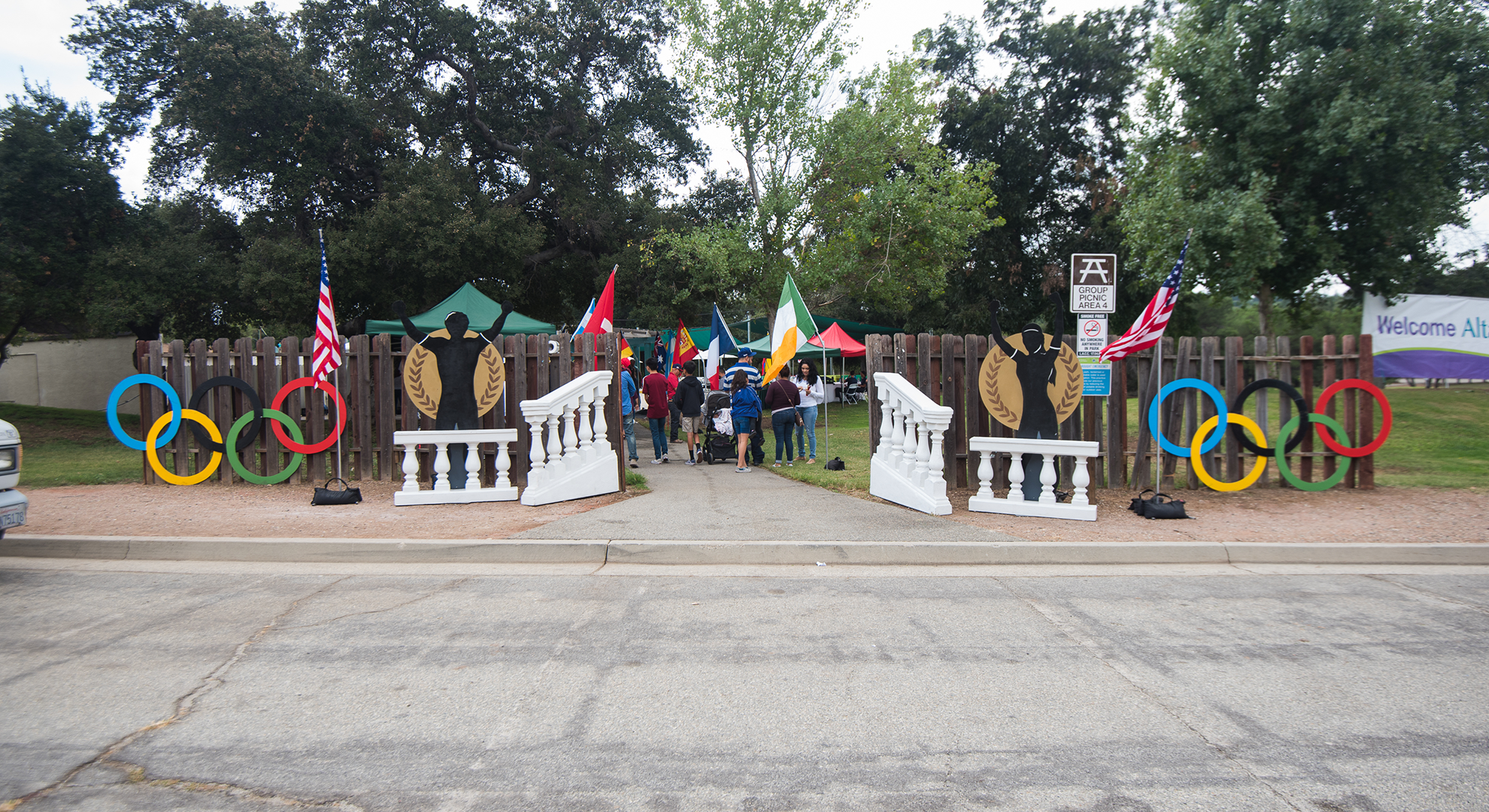 View Olympic Picnic Case Study
Try a Minute to Win It
Lead Time
1 Week
Cost
$
Groups
10-100+
Focus
Collaboration
Minute to Win It games are popular due to their quick time frame as well as their fun. They’re also incredibly customizable due to their nature and can be tailored to be high-intensity for determined teams. Tailoring these games to your high-achieving team is a great way to make them even more exciting. These games promote team bonding, problem-solving, and having fun.
THE ART OF CULINARY GAMES
We transformed a family-inclusive holiday gathering at 440 Seaton in Los Angeles into an immersive “Midnight in Paris” fantasy for Bazic Products. To inject a shot of high-energy competition into the elegant atmosphere, we reimagined classic “Minute to Win It” games with a distinct French culinary twist. Teams faced off in a high-stakes “Croissant Eiffel Tower” building contest, racing against the clock to architect pastry monuments, followed by a fierce “Mad Macarons” eating challenge that blindsided the daring contenders with hidden, fiery spicy surprises.
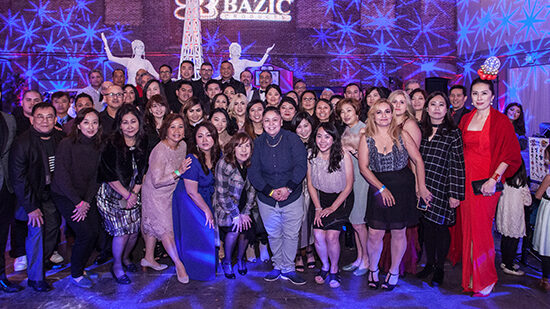 View Parisian Party Case Study
Small Group Games:
Try Improv Games
Lead Time
1 – 2 Weeks
Cost
$$
Groups
10 – 40
Focus
Communication
Foster spontaneity and adaptability through improvisation games like “Yes, And…” or scene building. This promotes effective communication, creativity, and the ability to think on one’s feet.
Try a Blindfolded Maze Walk
Lead Time
2 – 4 Weeks
Cost
$
Groups
10-25
Focus
Communication
Guide a blindfolded teammate through a maze, relying on clear communication and trust. This activity emphasizes the importance of effective communication, active listening, and building trust within the team.
Try Reverse Charades
Lead Time
1 Week
Cost
$
Groups
10-30
Focus
Collaboration
Act out a concept together, with each team member building on the previous clue without knowing the full word. This activity promotes teamwork, communication, and adaptability in a fun and creative way.
Try a Group Feedback Circle
Lead Time
1 Week
Cost
$
Groups
5-20
Focus
Communication
Facilitate open and honest feedback on individual and team performance. Focusing on growth and continuous improvement, this activity strengthens communication, trust, and a culture of constructive feedback.
Personalized Team Building Experiences
At the enterprise level, the complexity of the ‘Timeline’ becomes just as important as the event itself. Coordinating thousands of moving parts requires a multi-year strategy, as evidenced by our work on one of the largest corporate summits in the industry…
Mastering the Enterprise Planning Horizon
Managing 1,200+ attendees requires a massive corporate event planning timeline. For Behr, we architected a business summit integrated with seven simultaneous excursions, from Baja Chases in Red Rock Canyon to Hoover Dam tours.
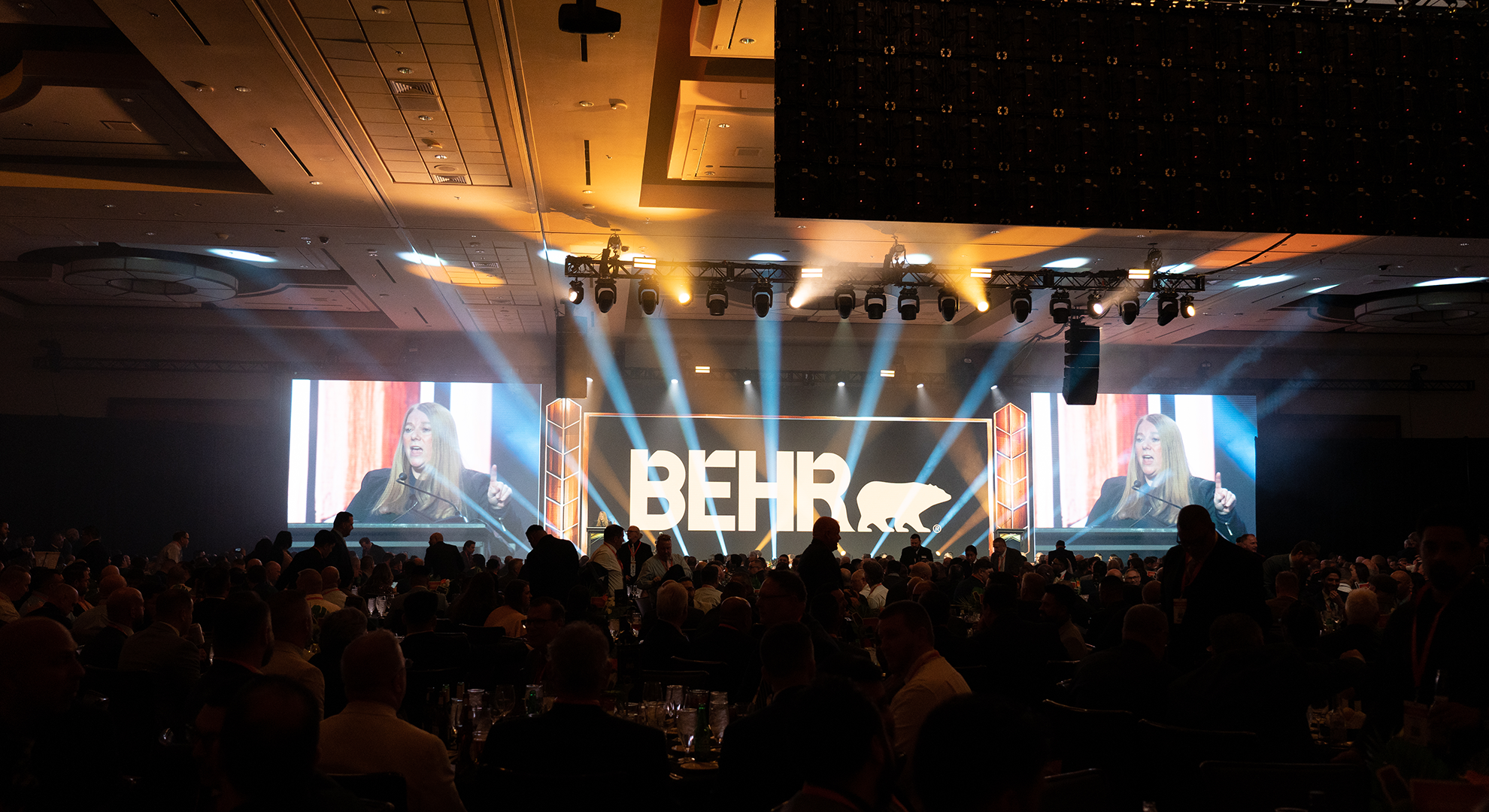 View Behr Case Study
To see how we map out the logistics for events of this scale, view our Corporate Event Planning Timeline Guide.
Remember, the best team-building experiences are tailor-made to your specific team’s interests and dynamics. Whether you’re looking for San Francisco excursions, picnics at Brookside Park in Pasadena, or event companies in Phoenix, our agency has connections across the nation.
Our event management agency and specialized team building event planners will collaborate with you to create the perfect team building experience for your high-achieving team. Fill out the form below to get started.
PRO TIP: When companies foster outside of work relationships and connection, we hear and observe from our clients that their employees learn conflict resolution, improvement in communication skills, and an overall positive attitude that fosters a happy workplace environment.
We believe that energy and health are contagious! Foster employees’ health for a healthy company that will continue to grow and evolve.
BOOK MY EVENT NOW!
* indicates required fields